
Your skin faces a different set of demands on holiday than it does during a normal week in London. Higher UV exposure, humidity shifts, chlorine, salt water, air-conditioned cabins, and more alcohol than usual all take their toll. Most people pack the same products they use at home, if they remember to pack any skincare at all.
The result? You come back looking older than when you left. The tan fades within days, but the dehydration lines, pigmentation, and rough texture stick around for much longer. A proper holiday skincare strategy covers three phases: what you do before you go, how you protect yourself while away, and what you do when you get back.
Before You Go: Preparing Your Skin
Two to four weeks of preparation makes a meaningful difference.
Book a HydraFacial one to two weeks before departure. Starting your holiday with deeply cleansed, hydrated skin gives you the best foundation. The treatment removes dead cell buildup (which causes patchy tanning), clears congested pores (which worsen in humidity), and delivers a hydration boost that helps your skin cope with the dehydrating effects of air travel and sun.
Adjust your active ingredients. If your routine includes retinol, AHAs, or BHAs, consider reducing the strength or frequency in the two weeks before your trip. These increase UV sensitivity, and you’ll be spending more time outdoors than usual. You don’t need to stop entirely, but dialling back reduces the risk of irritation and heightened sun sensitivity.
Start your SPF discipline early. Get into the habit of applying broad-spectrum SPF 30 or higher every morning for at least two weeks before you travel. This establishes a routine you’re less likely to skip poolside.
Consider skin boosters. For patients who want to arrive with genuinely luminous skin, a Profhilo treatment four to six weeks before travel floods the dermis with hyaluronic acid, improving hydration and glow at a level no topical product can match.
While You’re Away: Sun Protection and Routine Adjustments
Sun protection isn’t one item on your holiday list. It is the list.
Choose SPF 50 broad-spectrum and apply generously, roughly a two-finger-length strip for the face alone. Reapply every two hours without exception, and immediately after swimming or towelling off. Don’t neglect commonly missed areas: ears, back of the neck, tops of the feet, lip balm with SPF, and the part line in your hair.
Wear physical protection too. A wide-brimmed hat protects the face, ears, and neck. UV-rated sunglasses protect the delicate skin around the eyes. Sunscreen alone isn’t sufficient for extended outdoor exposure.
Switch to a lighter moisturiser. Humidity means the air provides some of the moisture your skin would normally need from a heavier cream. A gel-based formula prevents the greasy, congested feeling that rich creams cause in warm weather.
Cleanse gently, twice daily. Sweat, sunscreen, and increased sebum production mean your pores are under more pressure. A gentle gel cleanser morning and evening keeps skin clear without stripping it. Resist the temptation to wash more often, as over-cleansing triggers rebound oil production.
Treat your skin after sun exposure. An after-sun product or calming moisturiser with aloe vera, niacinamide, or centella asiatica helps soothe skin exposed to UV and heat. Apply generously in the evening.
For flights, skip the makeup and apply a richer moisturiser than your daytime norm. Aircraft cabin air runs at roughly 10 to 20 per cent humidity, stripping moisture from the skin over several hours. A hyaluronic acid serum under a barrier cream helps, and consistent water intake throughout the flight matters more than a litre at the airport.
When You Get Back: Recovery
Even with solid protection, a week of travel and sun takes a toll on your skin. A deliberate recovery plan brings it back faster.
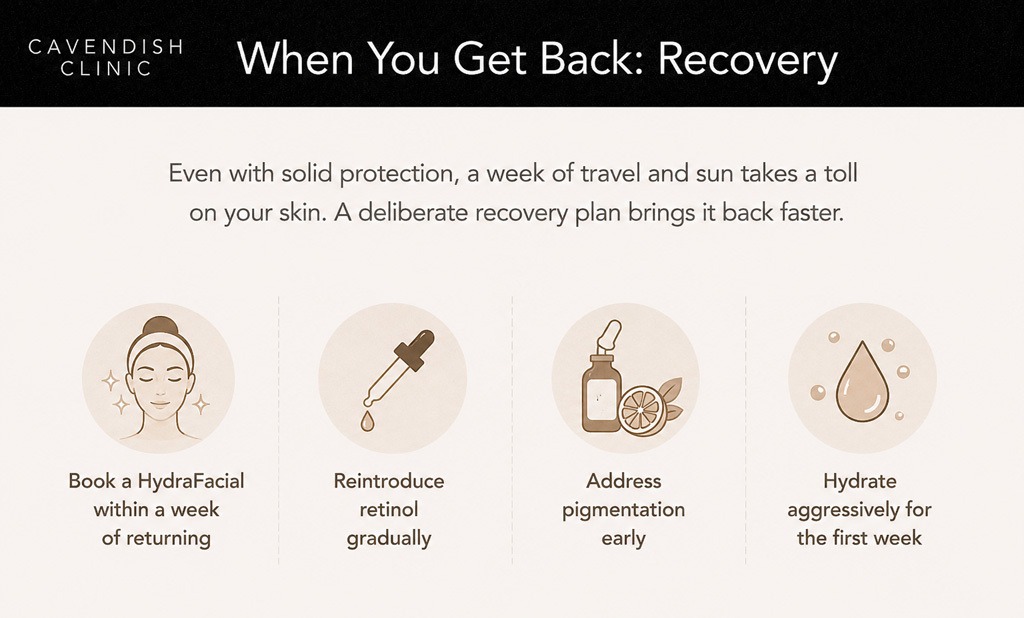
Book a HydraFacial within a week of returning. Post-holiday skin typically has sunscreen buildup, congested pores, dehydration, and uneven texture. A HydraFacial clears all of that in a single session, restoring clarity and glow. Our HydraFacial Deluxe with SkinCeuticals is particularly effective here.
Reintroduce retinol gradually. If you paused it before your trip, ease back in over a week or two. Start with every other night before returning to your normal frequency.
Address pigmentation early. New dark spots or uneven tone respond best to prompt treatment. Vitamin C serum in the morning brightens existing pigmentation, and niacinamide supports an even complexion. For stubborn pigmentation, your practitioner may recommend a professional treatment plan.
Hydrate aggressively for the first week. Double down on water intake, hyaluronic acid serums, and hydrating masks. Your skin is playing catch-up, and generous moisture helps it recover faster.
For visible sun damage such as new pigmentation, deeper lines, or rough texture, treatments like Morpheus8 or chemical peels can address these concerns more intensively. Book a consultation to discuss the best approach for your skin.
Why Choose Cavendish Clinic for Pre- and Post-Holiday Skin?
Our practitioners assess your skin’s current condition and recommend treatments tailored to your destination, skin type, and concerns. From HydraFacial with SkinCeuticals boosters to Profhilo and Morpheus8, we offer the full spectrum of treatments your skin might need around the travel cycle. All treatments are delivered under the clinical oversight of Mr Matthew James, Consultant Plastic Surgeon with over 20 years of experience. Our Fitzrovia clinic at 65 Margaret Street is easy to reach for a quick appointment before or after your trip.