

Exosome skin rejuvenation London patients ask us about is a regenerative treatment that applies exosomes, tiny cell to cell signalling messengers, to the skin to support natural repair, collagen and elastin. It is often combined with microneedling to improve absorption. Research is promising but still developing, so suitability and product choice should always be discussed with a qualified practitioner.
Interest has grown quickly among Londoners who are noticing fine lines and early signs of ageing and want fresher, healthier skin without fillers, surgery or time away from work.
Every cell in the body releases extracellular vesicles, microscopic packages wrapped in a membrane. Exosomes are among the smallest, and they carry proteins, lipids and genetic material such as RNA between cells, acting a little like text messages that help cells coordinate repair and renewal.
Exosomes are not stem cells, contain no living cells and do not turn into new skin cells. Laboratory and early clinical research suggests they may influence how skin cells behave, for example by supporting collagen activity and calming inflammation.
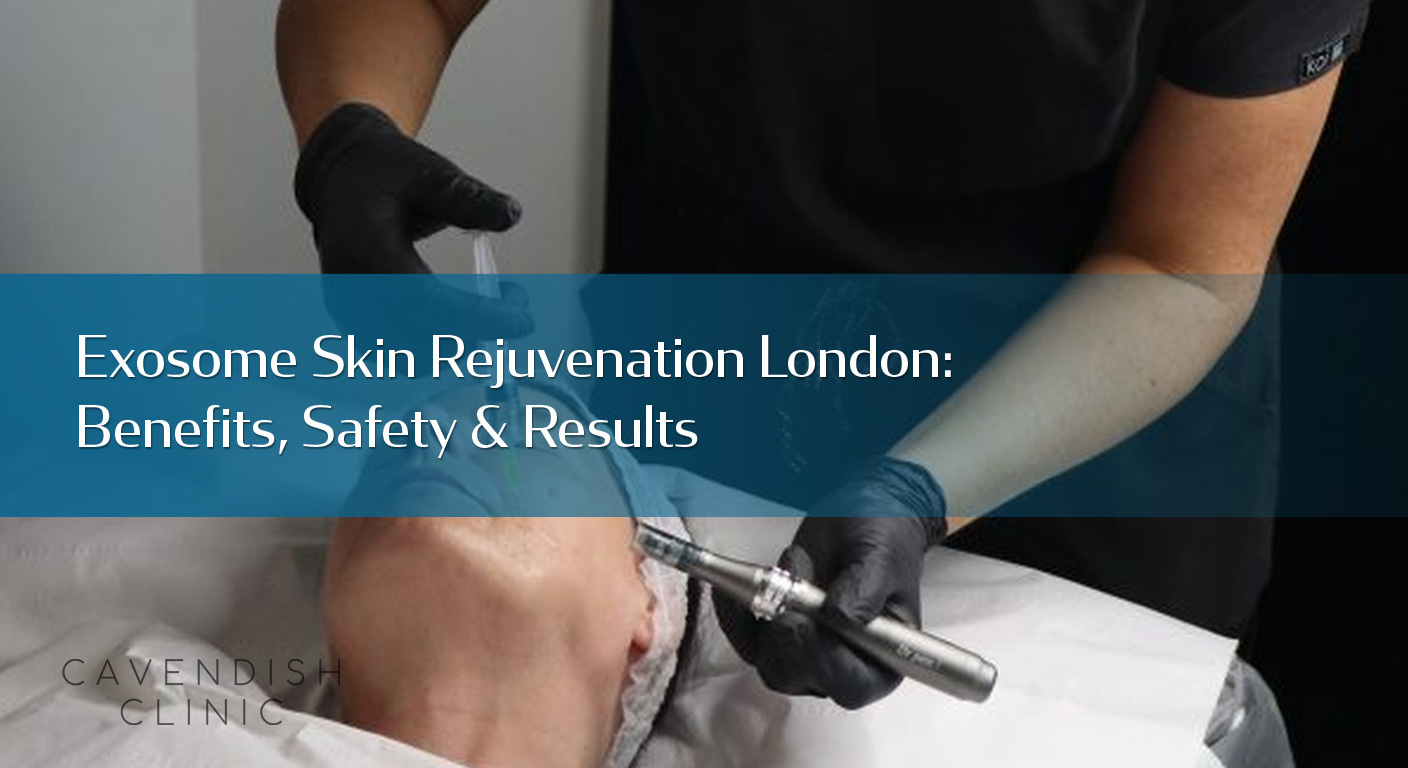
Exosomes are relatively large particles, so they struggle to pass through intact skin. This is why they are so often applied straight after microneedling, which creates thousands of tiny channels in the surface and allows the preparation to reach the layers where collagen is made. The source of the exosomes, the formulation and the application method all shape what a product can realistically achieve.
Exosomes for skin rejuvenation are being studied across several concerns. Reported or investigated improvements include:
Exosomes may help even out skin tone, but hyperpigmentation caused by sun exposure or hormones tends to return without daily SPF, so it is usually managed with a combined plan rather than one treatment.
These are potential benefits rather than proven outcomes for everyone. Many studies are small or manufacturer funded, and results depend on the product, technique and your skin.
Cavendish Clinic’s clients often see a fresher look after their first session and improvement typically evolves over two to six weeks as the skin renews. Collagen remodels slowly so texture changes, deeper lines or scarring take longer to see. Effects can last several months.
Age, skin type, sun exposure, smoking and aftercare all influence the outcome. When viewing exosome treatment before and after pictures, look for uniform lighting and angles, and remember that someone else’s result is not a predictor of yours.
Exact steps vary by product and protocol, but a typical exosome skin treatment is as follows
Exosome treatment safety depends on the product, how it is applied and who performs the treatment.
Product source and quality matter. Ask where the exosomes come from, how they are made and tested, and what documentation exists.
Application route matters. Topical application to intact skin, application after microneedling and injection carry different levels of risk. A product intended for topical use is not automatically suitable for injection, and commercial availability does not mean approval for every use. Not all exosome products are regulated the same way in the UK, so ask about intended use and regulatory classification.
Possible exosome facial side effects are mostly linked to the procedure and may include redness, swelling, irritation, tenderness, bruising and, rarely, infection or allergic reaction.
Long term evidence is limited. Exosome therapy for skin is a young field, and larger long term studies are still needed. A qualified practitioner, informed consent and an individual assessment are essential.
You may wish to consider the treatment if you have early signs of ageing, uneven texture, dull looking skin, fine lines or certain types of acne scarring. If dryness and crepey texture are your main concern, your practitioner may suggest Profhilo instead, an injectable skin booster that uses hyaluronic acid to hydrate the skin from within.
Suitability is always assessed individually. The treatment may not suit people who are pregnant or have autoimmune conditions. Tell your practitioner if you are breastfeeding, or have an active skin infection, an inflammatory skin condition, allergies or relevant medical history.
Exosome treatment, microneedling and PRP are all regenerative treatments that work with the skin’s own repair processes. Each takes a slightly different approach, so the right choice depends on your skin, your goals and how you like to be treated.
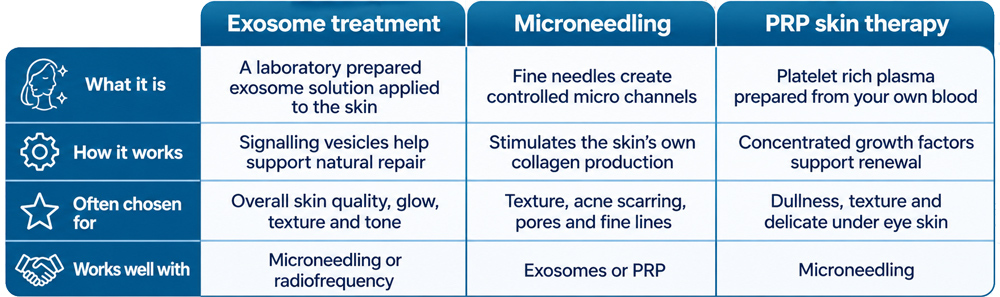
PRP skin therapy appeals to people who like the idea of using their own natural growth factors, while exosome treatment offers a laboratory prepared alternative for those who prefer not to have a blood sample taken. Microneedling can be used on its own or alongside either. Your practitioner will recommend a single treatment or a combination based on your skin during your consultation.
If you are treated during the colder months, cold wind and central heating can both draw moisture from healing skin, so many patients adapt their winter skin care routine with a richer moisturiser and a gentler cleanser while the skin recovers.
Where can I have exosome skin rejuvenation in London? Cavendish Clinic offers exosome skin rejuvenation at its doctor-led clinic in Fitzrovia, central London, alongside a wide range of non surgical skin rejuvenation London patients can combine into one plan.
How we treat: the treatment can be performed on its own or paired with SkinPen microneedling or radiofrequency to boost absorption. A single session suits a general refresh, a course of three often helps early concerns, and a course of five may be advised for deeper wrinkles, pigmentation and scarring. Maintenance every six to twelve months helps sustain results.
How we work towards better results: your practitioner assesses texture, tone, laxity and hydration separately before recommending a protocol, and progress is reviewed between sessions as part of a bespoke regenerative skincare plan. For skin that has started to lose firmness, Morpheus8 is often a better match, as it combines microneedling with radiofrequency heat to tighten as well as resurface.
Why patients choose us: consultations for new clients are complimentary, and if you are found unsuitable after consultation, the clinic offers a full refund.
To find out whether exosomes suit your skin, book a consultation with the team in Fitzrovia.