
If you’ve spent any time scrolling through fat-freezing transformation photos, you’ll know the results can look genuinely impressive. But photos only tell half the story. What actually happens under the skin, how long it takes, and what a realistic outcome looks like for your body are the questions that matter most before you book a consultation.
This guide walks through what Coolsculpting actually does, what typical before and after results look like, and how to set expectations that match reality rather than a highlight reel.
What CoolSculpting Actually Does to Fat Cells
CoolSculpting works on a simple scientific principle: fat cells are more sensitive to cold than the skin and tissue around them. During treatment, an applicator delivers controlled cooling to a targeted area, triggering a natural process called apoptosis. In plain English, the fat cells die off and your body clears them out gradually through the lymphatic system over the following weeks.
The current generation of the technology, CoolSculpting Elite, is FDA approved and has been used in millions of treatments worldwide. What sets it apart from earlier machines is the applicator design. The newer C-shaped applicators cover roughly 18% more surface area per cycle, and many clinics now run dual applicators at once, treating two zones simultaneously rather than one after another. In practice, that means shorter overall appointment times without cutting corners on coverage.
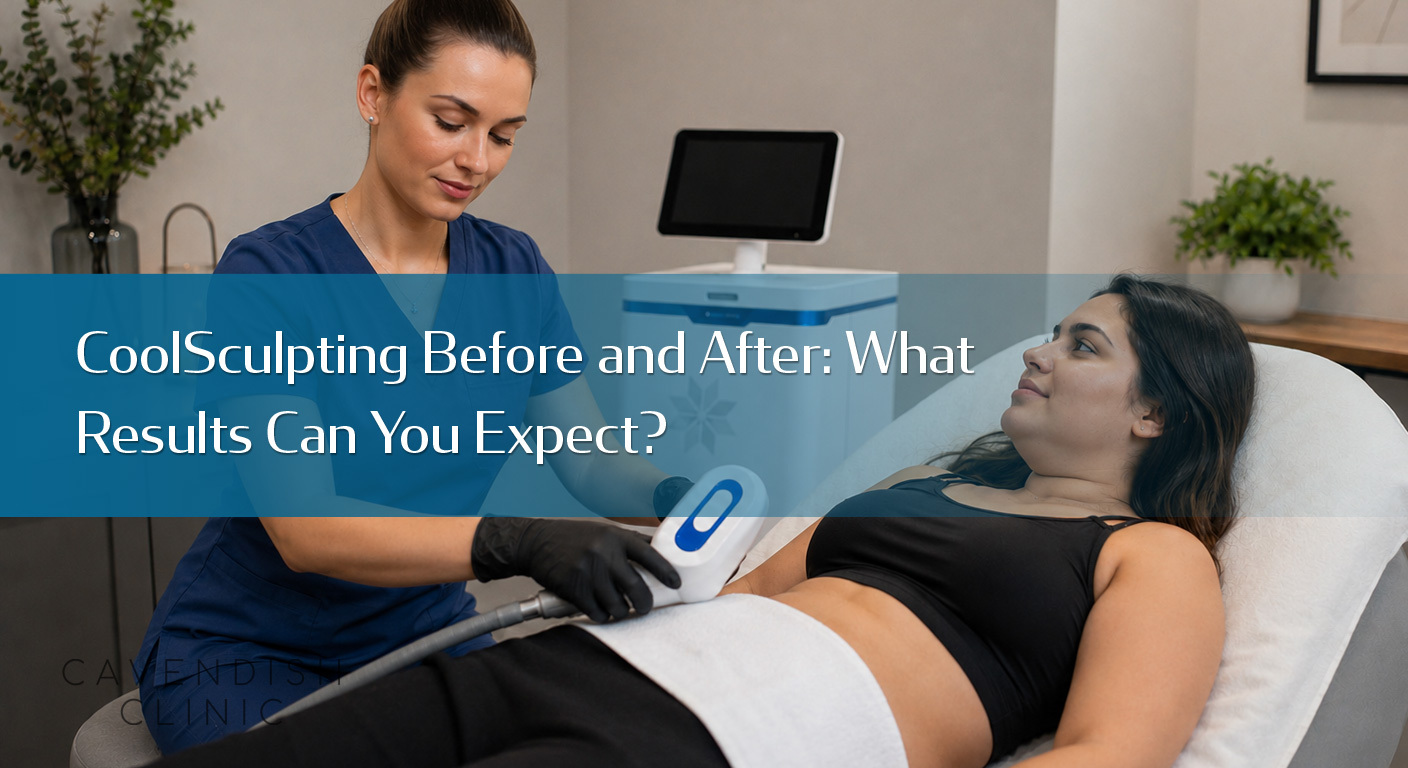
This is why CoolSculpting is described as non-invasive. There’s no cutting, no anaesthesia, and no recovery time in the surgical sense. You can walk in, have the treatment, and walk out again. A typical session runs somewhere between 45 and 60 minutes per area. The fat cells that are destroyed don’t come back, which is one of the reasons the results tend to hold up well over time, provided your weight stays relatively stable afterwards.
It’s worth being clear about what this treatment is not. It isn’t a weight loss solution. It’s a body contouring tool designed for people who are close to their target weight but have stubborn pockets of fat that don’t respond to diet and exercise, think love handles, a bit of a belly pouch, or fullness under the chin.
The Realistic Timeline: When Will You See Results?
One of the biggest sources of disappointment with any body contouring treatment is impatience. CoolSculpting is not instant. Your body needs time to process and remove the treated fat cells, and rushing to judge the result at week two is setting yourself up to feel let down.
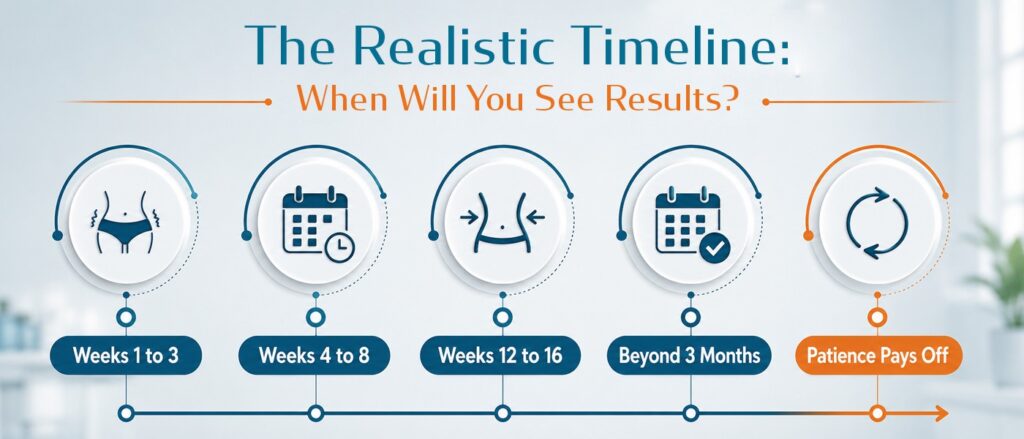
Here’s a rough breakdown of what happens and when:
Weeks 1 to 3: The treated area may feel numb, tender, or slightly swollen. This is normal and part of the process, not a sign anything’s gone wrong.
Weeks 4 to 8: This is usually when you’ll start noticing subtle changes. Clothes might fit a touch differently. The area may feel less dense.
Weeks 12 to 16: Most people see their full result somewhere in this window. Your body has had enough time to clear out the majority of the destroyed fat cells.
Beyond 3 months: Some people continue to see gradual refinement for up to six months, particularly with larger treatment areas or multiple sessions. Clinics typically space repeat sessions four to six weeks apart to give the body time to process each round properly before the next.
So when someone shows you a “before and after” photo from six weeks post-treatment, know that it likely isn’t the final result. The full picture takes patience.
What Typical Before and After Photos Actually Show
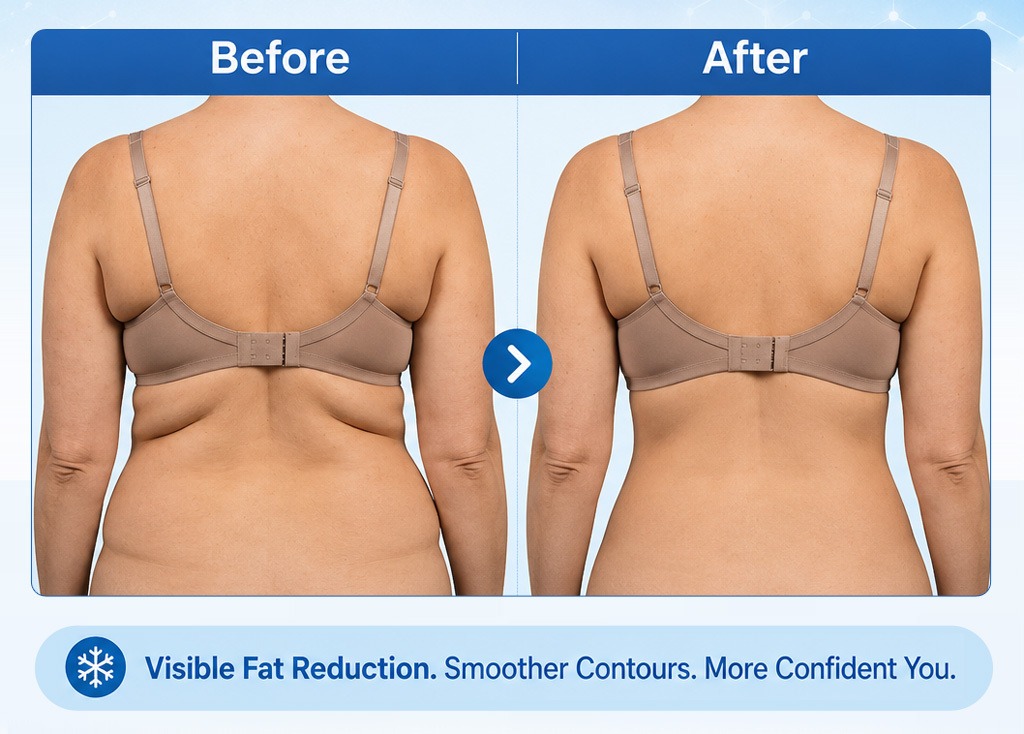
Genuine before and after photos, the kind taken by a reputable clinic under consistent lighting, angles, and conditions, usually show a fat reduction of roughly 20% to 25% in the treated area after a single cycle. That figure lines up with the clinical data behind CoolSculpting Elite and with what’s reported more broadly in studies on cryolipolysis, though individual results vary based on how much fat was there to begin with, your skin elasticity, and how many sessions you have.
What this tends to look like in practice:
On the abdomen, a visible flattening or reduction in the pinchable fat layer, often making the waistline appear more defined rather than dramatically smaller.
Around the flanks (love handles), a smoother transition from waist to hip, which can make clothing sit better.
On the upper arms and back or bra area, a subtly tighter silhouette, these are common treatment zones precisely because they’re notoriously resistant to targeted exercise.
Under the chin, a tighter, less doubled appearance, which is often one of the more noticeable transformations because the area is small and changes are easier to spot.
What genuine before and after images generally don’t show is a complete body transformation. This is contouring, not reshaping. If someone’s photos look like they’ve lost several stone, either multiple treatments over time were involved, other lifestyle changes happened alongside it, or the comparison isn’t entirely honest.
Factors That Influence Your Results
No two people get identical results from the same treatment, and a good clinic should tell you this upfront rather than promising a one-size-fits-all outcome. A few things make a real difference.
Your starting fat thickness matters. Areas with a decent pinch of fat tend to show more visible change than areas that are already fairly lean, simply because there’s more to reduce.
Skin elasticity plays a role too. Younger, more elastic skin tends to retract smoothly after fat reduction, giving a tighter finished look. Skin that’s lost some elasticity, often due to age or previous weight fluctuations, may not snap back quite as neatly, though this varies a lot person to person.
The number of sessions counts. A single treatment gives a noticeable but modest change. Many people go through a longer course, often somewhere between six and twelve sessions across different zones over time, to build a more complete result.
And then there’s the technology itself. This is where it’s worth understanding that not all fat-freezing devices are equal. Older systems used less precise cooling panels and longer treatment times, with a single applicator working one area at a time. Clinics offering New Fat-Freezing Tech are generally working with more advanced, larger-coverage applicators that cool more evenly and can treat two zones at once, which tends to mean more comfortable sessions and more consistent results than earlier generations of the device.
Maintaining Your Results Long-Term
Here’s something that doesn’t get said enough: the fat cells destroyed during CoolSculpting are gone for good. They don’t regenerate. But that doesn’t mean the area is immune to future weight gain. If you put on significant weight after treatment, the fat cells that remain in that area, and elsewhere in your body, can still expand.
The practical takeaway is straightforward. Keep your weight reasonably stable, stay active, and eat sensibly, and there’s no scientific reason your results shouldn’t last for years. Think of it less as a permanent fix and more as removing a stubborn head start that diet and exercise alone weren’t shifting.
Who Tends to Get the Best Results?
Based on clinical experience and published outcome data, the best candidates for CoolSculpting share a few traits. They’re at or near a stable, healthy weight. They have specific, localised areas of fat that haven’t responded to exercise. They have reasonably good skin elasticity. And, importantly, they have realistic expectations about what “contouring” means versus “weight loss.”
If you’re significantly overweight, CoolSculpting isn’t the right tool, a structured weight loss plan would serve you better first. But if you’re already fit and active with one or two areas that just won’t budge, this is exactly the kind of case where the treatment tends to shine.
Choosing the Right Clinic Makes a Genuine Difference
This is the part that often gets glossed over in generic guides, but it matters enormously. CoolSculpting is technique-dependent. The practitioner’s experience in applicator placement, understanding your specific anatomy, and knowing how many cycles to apply to a given area all affect your final result.
A clinic that’s treated thousands of patients across a wide range of body types will spot things a less experienced provider might miss, like asymmetry that needs correcting for, or an area that would actually respond better to a different applicator size. This is one of the main reasons practitioners recommend going to a well-established provider rather than the cheapest option on a voucher site.
For anyone in the capital researching options, Cavendish Clinic in London has built its reputation around this exact point, treating body contouring as a precision procedure rather than a quick add-on service. The clinic was founded over fifteen years ago and was among the first in the UK to offer CoolSculpting, with tens of thousands of treatments delivered since.
Their consultation process starts with a proper physical assessment, mapping out which areas will actually respond well rather than treating every client with a blanket protocol. Every plan is also medically overseen, with a co-founding plastic surgeon carrying more than twenty years of experience and thousands of procedures behind him providing clinical oversight across the treatments offered. That’s the kind of groundwork that separates a considered treatment plan from a rushed one.
Once your treatment areas are confirmed, the actual session itself is where the equipment matters most. CoolSculpting Elite in London is delivered using the newer C-shaped, dual-applicator system designed to treat trickier contours with more even cooling, which is part of why this generation of devices tends to outperform older ones on comfort, coverage, and precision. Pricing for treatment typically starts from around £260 per session, though your practitioner will confirm exact costs once your plan is mapped out.
More broadly, working with what’s often referred to as the UK’s Leading Medical Aesthetic Clinic tends to mean access to newer applicator technology, practitioners with substantial hands-on experience, and, just as importantly, honest guidance on whether you’re actually a good candidate in the first place. A clinic confident in its results won’t need to oversell you, and won’t hesitate to suggest a different treatment altogether if that’s genuinely the better fit for your goals.
Setting Realistic Expectations Before You Book
Before any consultation, it helps to walk in with a clear, grounded picture of what you’re hoping to achieve. A few honest questions to ask yourself:
Am I close to my goal weight, or am I hoping this treatment will get me there? Do I have a specific, stubborn area rather than general overall fatness? Am I prepared to wait three to four months to see the full picture? And am I comfortable that results, while noticeable, will be a refinement rather than a dramatic overhaul?
If you can answer yes to most of these, CoolSculpting is likely to deliver a result you’ll be pleased with. A qualified practitioner will also examine your treatment area in person and give you a far more personalised prediction than any generic article, including this one, ever could.
The Bottom Line
CoolSculpting results are real, backed by clinical research, and can genuinely improve body confidence when the treatment is matched to the right candidate. But they’re gradual, modest by design, and highly dependent on the skill of whoever’s holding the applicator.
The most reliable way to know what result you personally can expect is a proper in-person assessment. Photos and averages give you a ballpark. A trained eye looking at your specific anatomy gives you an actual answer.
This article is for general information only and doesn’t replace personalised medical advice. Always consult a qualified practitioner to discuss whether CoolSculpting is suitable for you.
Related Blog : CoolSculpting vs Liposuction: Which Is Right for You in UK?