

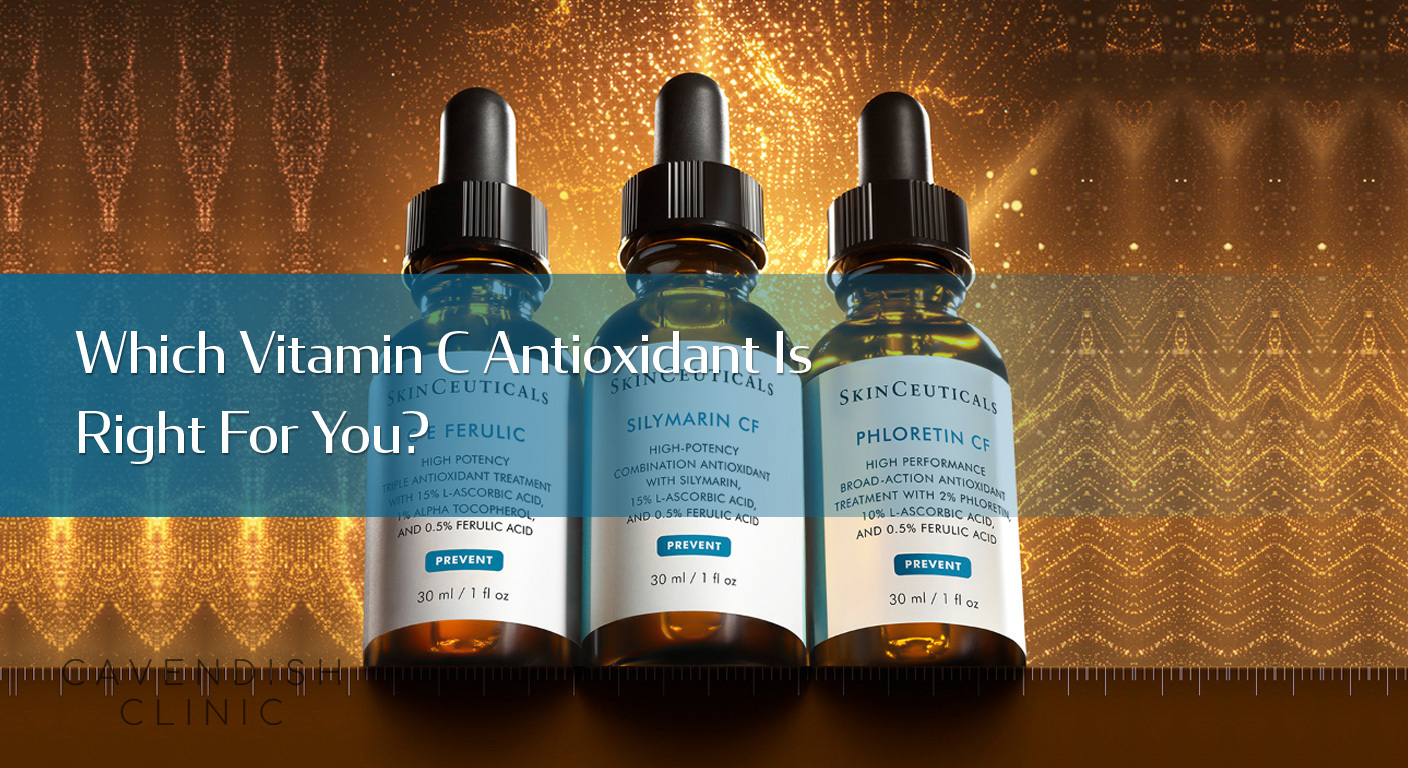
Key Takeaways
- Vitamin C boosts collagen, brightens skin, fights free radicals and supports your sunscreen against UV damage.
- Pick your serum by concern: C E Ferulic for ageing, Phloretin CF for pigmentation, Silymarin CF for oily skin, Serum 10 AOX+ for sensitive skin.
- Apply 4–5 drops every morning after cleansing, then moisturiser and a broad-spectrum SPF 30 or higher.
- Store your serum somewhere cool and dark, and replace it if it turns dark orange or brown.
- Avoid common mistakes like using too high a strength, skipping SPF or layering too many actives at once.
- Be patient, as brighter skin shows in weeks but dark spots and fine lines need consistent long-term use.
Vitamin C is one of the most researched ingredients in skincare, so we wanted to take a moment to talk about why Vitamin C plays such an important part in your skincare regime and which SkinCeuticals products we would recommend adding to your daily routine.
WHICH SKINCEUTICALS VITAMIN C SERUM SHOULD YOU CHOOSE?
- Ageing, fine lines and loss of firmness: C E Ferulic
- Discolouration and uneven skin tone: Phloretin CF
- Oily, blemish-prone skin: Silymarin CF
- Sensitive skin, or new to vitamin C: Serum 10 AOX+
Whichever you choose, apply it in the morning after cleansing and always follow with a broad-spectrum SPF.
DISCOVER THE TOP 7 INCREDIBLE BENEFITS OF VITAMIN C:
Collagen Production: Vitamin C serum is essential for the production of collagen, a protein that helps to keep the skin firm and elastic. As we age, our bodies produce less collagen which results in wrinkles and sagging skin. Vitamin C promotes collagen synthesis which helps improve skin texture and reduce the appearance of fine lines and wrinkles.
Antioxidant Protection: Vitamin C is a powerful antioxidant that helps protect the skin from damage caused by free radicals, molecules that can lead to premature aging and skin damage. By neutralising free radicals, vitamin C helps prevent oxidative stress and keeps the skin looking youthful.
Skin Brightening Effect Vitamin C inhibits melanin production and has skin brightening properties. Melanin is the pigment that gives skin its color, and when it is overproduced, it can lead to hyperpigmentation in the form of dark spots and an uneven skin tone. Vitamin C can help fade existing dark spots and prevent the formation of new ones, resulting in a more even complexion.
Sun Protection: While not a substitute for sunscreen, vitamin C can help protect the skin from sun damage. It acts as a secondary defense mechanism against UV radiation by neutralising free radicals generated by sun exposure. Additionally, some research suggests that vitamin C may enhance the effectiveness of sunscreen when used together. This matters in the UK too, because UVA rays reach your skin all year round, even on cloudy days.
Wound Healing: Vitamin C is crucial to the skin’s natural healing process. It helps to encourage the formation of collagen, which is needed for the repair of damaged skin tissue. Vitamin C can help increase the speed of the healing process and improve the general look of skin, as well as reduce scarring risk. Note that vitamin C serum should not be applied to open wounds and is not a scar treatment by itself. Speak to our practitioners about the right scar treatment for you.
Anti-inflammatory Properties: Vitamin C is a mild anti-inflammatory, and may help to soothe irritated or inflamed skin. It can be useful for conditions such as acne, rosacea and eczema by helping to reduce redness and inflammation. However, pure vitamin C (L-ascorbic acid) can irritate very sensitive, rosacea-prone or eczema-prone skin, so we recommend a consultation before starting.
Hydration and Moisture Retention: Vitamin C helps strengthen the skin’s barrier function, allowing it to better retain moisture. This can result in smoother, more hydrated skin with improved texture and suppleness. For best results, follow your vitamin C serum with a moisturiser.
WHICH VITAMIN C ANTIOXIDANT IS RIGHT FOR YOU?
This essential nutrient helps to keep skin healthy by protecting it from oxidative damage caused by daily exposure to light, heat, and pollution. With the right skincare product, adding Vitamin C to your beauty regimen can brighten your skin, reduce inflammation, and promote healthy collagen production. Depending on your skin concern, we have made a list of which vitamin C antioxidant formulas are right for you.
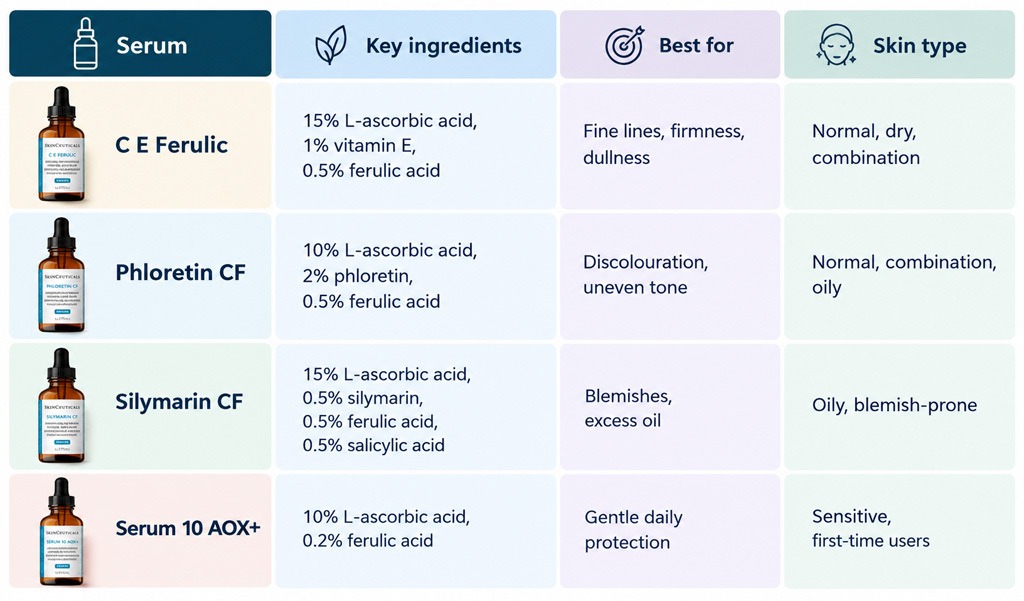
SKINCEUTICALS VITAMIN C SERUMS AT A GLANCE
SKIN CONCERN: AGEING
C E Ferulic Antioxidant is an award-winning antioxidant that delivers advanced environmental protection against atmospheric skin ageing. It helps to prevent free radical damage and improves the appearance of fine lines, wrinkles, and loss of firmness. It combines 15% pure vitamin C (L-ascorbic acid) with 1% vitamin E and 0.5% ferulic acid, which helps stabilise the vitamin C and boost its antioxidant effect.
Best for: normal, dry and combination skin.
SKIN CONCERN: DISCOLOURATION & PIGMENTATION
Phloretin CF Antioxidant is a synergistic vitamin C combination antioxidant that prevents free radical damage, diminishes the appearance of discolouration, and improves skin’s overall tone and texture. It contains 10% pure vitamin C, 2% phloretin and 0.5% ferulic acid.
Best for: dark spots and uneven tone on normal, combination or oily skin. Use daily SPF alongside it to protect your results.
SKIN CONCERN: BLEMISHES, BREAKOUTS & ACNE
Silymarin CF Antioxidant is a powerful antioxidant serum with Vitamin C for oily and blemish-prone skin to help prevent oil oxidation that may lead to breakouts. It fights against visible skin ageing. Clinically proven to reduce oil oxidation by up to 76%*. It combines 15% pure vitamin C with 0.5% silymarin, 0.5% ferulic acid and 0.5% salicylic acid.
Best for: oily, congested and blemish-prone skin. As it contains salicylic acid, check with your GP or our practitioners if you are pregnant or breastfeeding.
Having a HydraFacial? Read our guide to using Silymarin CF after HydraFacial.
SKIN CONCERN: SENSITIVE SKIN :
Serum 10 Antioxidant is a fast-absorbing vitamin C combination antioxidant serum that helps protect skin from free radicals and defend against environmental damage. It helps to reduce the appearance of fine lines and wrinkles while restoring healthier-looking skin. With a lower 10% vitamin C and 0.2% ferulic acid, it is gentler on sensitive skin and a good starting point if you are new to vitamin C.
Tip: start every other morning, then build up to daily use once your skin is comfortable.
HOW TO USE YOUR VITAMIN C SERUM
- Cleanse and pat your skin dry.
- Apply 4–5 drops to your face, neck and chest in the morning.
- Follow with moisturiser.
- Finish with a broad-spectrum SPF 30 or higher.
Keep the bottle tightly closed in a cool, dark place. If the serum turns dark orange or brown, it has oxidised and is losing effectiveness. Always patch test a new product first.
COMMON VITAMIN C MISTAKES TO AVOID
Vitamin C is one of the most effective ingredients in skincare, but small mistakes can stop it from working as well as it should. These are the issues our practitioners at Cavendish Clinic see most often, and how to fix them.
Choosing the wrong strength for your skin. A higher percentage isn’t always better. A 15% L-ascorbic acid serum like C E Ferulic suits many skin types, but it can feel too strong on sensitive or reactive skin. If you’re new to vitamin C, a gentler formula like Serum 10 AOX+ is often a better place to start.

Skipping sunscreen. Vitamin C boosts your skin’s defence against environmental damage, but it can’t do the job of an SPF. Without daily sunscreen, you’re likely to undo the brightening and anti-ageing benefits you’re working towards, especially if you’re treating pigmentation.
Storing it in the wrong place. Heat, light and air break down vitamin C over time. A sunny windowsill or a steamy bathroom shelf is one of the quickest ways to shorten its life. Keep the bottle tightly closed and store it somewhere cool and dark.
Using a serum that has oxidised. If your serum has turned dark orange or brown, it has lost much of its effectiveness. Using it anyway won’t give you the results you’re paying for, so it’s time to replace it.
Layering too many actives at once. Applying vitamin C alongside several strong products, such as exfoliating acids or benzoyl peroxide, in the same routine can lead to irritation or reduce how well each one works. Keeping vitamin C for the morning and stronger actives for the evening is a simple way to avoid this.
Giving up too soon. Vitamin C works gradually. Brighter-looking skin can show within a few weeks, but improvements in dark spots and fine lines take consistent daily use over a longer period. Stopping early is one of the most common reasons people feel it “didn’t work.”
If you’ve tried vitamin C before and didn’t see results, or your skin reacted to it, it doesn’t mean it isn’t right for you. Often it’s simply a case of the wrong formula or the wrong routine. Our practitioners can look at what you’re currently using, assess your skin, and help you build a routine that works.