

If you’re considering a professional skin treatment to improve texture, firmness, or address pigmentation, you’ve likely encountered two names: RF microneedling and laser therapy. Both offer proven results in skin rejuvenation without requiring invasive surgery. Yet they work differently, suit different skin concerns, and come with distinct advantages. This detailed comparison will help you understand which approach aligns with your skin goals, lifestyle, and expectations.
At our Fitzrovia clinic, we work with both technologies regularly and understand the nuances that distinguish them. Rather than declaring one universally superior, we believe the right choice depends on your unique skin profile, concerns, and recovery tolerance. This guide breaks down the science behind each approach, compares their outcomes, and helps you understand which might be the better fit for your skin.
RF microneedling is a non-invasive radiofrequency microneedling treatment that combines two proven technologies: controlled microneedling and radiofrequency energy. The device uses fine needles to create channels in the skin, then delivers targeted heat energy (radiofrequency) beneath the surface. Think of it as a precision tool that creates microscopic pathways whilst simultaneously heating the deeper layers of your skin.
This controlled micro-injury signals your skin to activate its repair response. Collagen and elastin production ramps up, resulting in firmer, smoother skin over weeks and months. The beauty of this mechanism is that it works across different skin chemistry. Because the injury is highly controlled, RF microneedling avoids severe trauma of ablative lasers, making it suitable for a broader range of skin tones and types. It is particularly appealing for clients who want meaningful results without the downtime associated with more aggressive treatments.
Laser skin therapy uses focused light energy to treat a range of skin concerns. Two main categories exist: ablative lasers, which remove the outermost layer of skin, and non-ablative lasers, which heat the deeper dermis whilst leaving the surface intact. Both stimulate collagen remodelling and can address pigmentation, sun damage, and textural concerns. The choice between ablative and non-ablative depends on your skin concern and how much downtime youre willing to accept.
Non-ablative options include fractional CO2 and erbium lasers for laser skin resurfacing. They offer impressive results but often require longer recovery and carry a higher risk of side effects like post-inflammatory hyperpigmentation, particularly in darker skin tones. Ablative lasers deliver substantial transformations but involve significant downtime. Many practitioners now favour fractional technology because it allows portions of untreated skin between treated zones to speed overall healing.
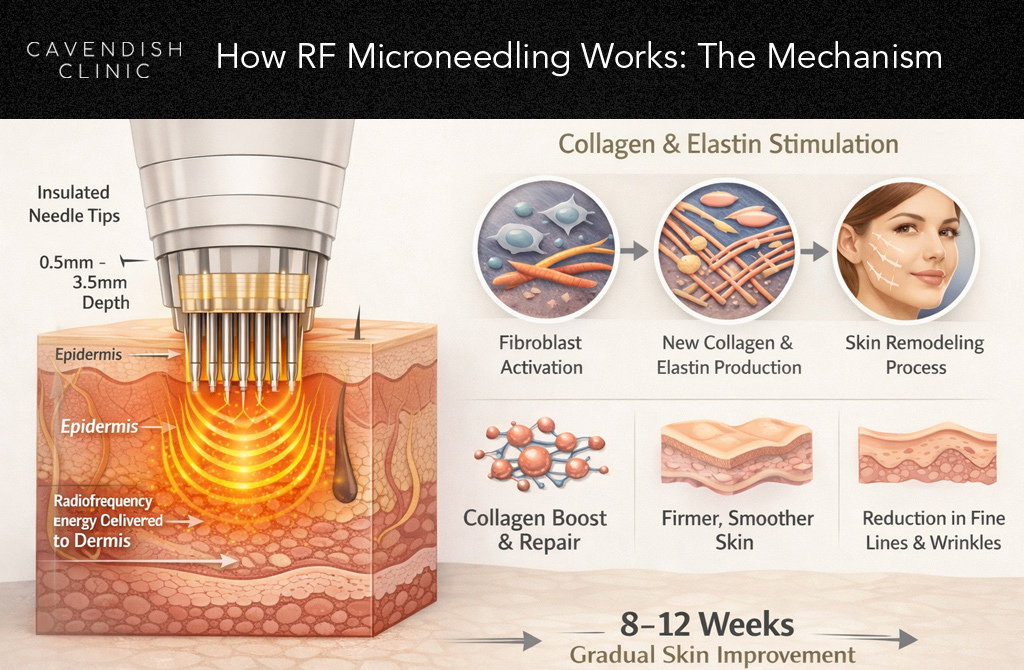
When RF microneedling begins, insulated needles penetrate the epidermis and dermal layers at precise depths, typically between 0.5mm and 3.5mm. As they advance, they deliver radiofrequency energy directly to the dermis, creating heat. This heat triggers immediate collagen contraction and, more importantly, initiates a months-long remodelling process. The insulation around the needle shaft is absolutely critical to the safety and efficacy of the treatment.
Your body perceives this controlled injury as a signal to build new collagen and elastin fibres. Fibroblasts (the cells responsible for collagen production) ramp up activity. Over 8-12 weeks, the cumulative effect becomes visible: skin appears firmer, fine lines soften, and texture improves. The timeline is gradual but consistent. Many clients report that the results feel natural because the skin is essentially repairing itself from within rather than having its surface forcibly resurfaced.
The insulated needle tips are key. They protect the epidermis from heat damage whilst ensuring the radiofrequency energy reaches exactly where it needs to: the dermis. This precision is why RF microneedling achieves results with minimal surface disruption. You wont experience the peeling or visible skin shedding that sometimes follows ablative laser treatments. The treatment stimulates collagen without sacrificing the skins natural barrier function.
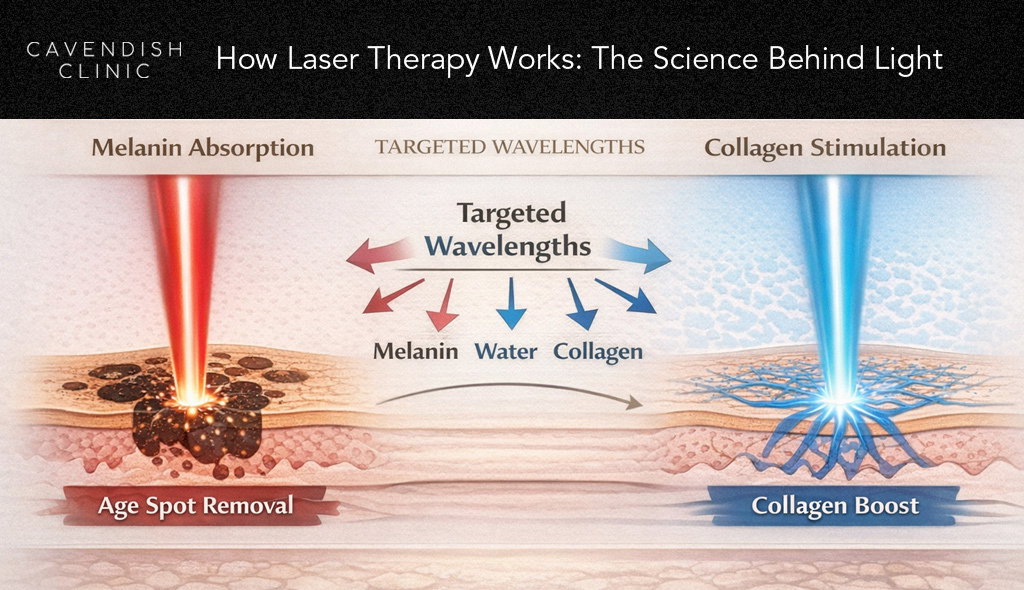
Lasers used in skin rejuvenation treatments work by emitting concentrated light at specific wavelengths. Each wavelength targets particular chromophores (light-absorbing molecules) in the skin. Melanin absorbs certain wavelengths; water and collagen absorb others. This selectivity is why different lasers suit different concerns. A melanin-targeting laser might be perfect for age spots but less effective for general collagen stimulation.
When the laser beam strikes the skin, energy is converted to heat. This heat either destroys pigmented cells (useful for age spots and melasma) or stimulates collagen production in the deeper layers. Fractional laser technology divides the beam into many micro-zones, allowing untreated skin between treated areas to speed healing. The untreated skin acts as a biological bandage and source of healing factors that accelerate recovery. Ablative fractional lasers vaporise the epidermis in a pattern whilst leaving bridges of skin to heal, whereas non-ablative fractional lasers leave the epidermis largely intact but heat the dermis intensely.
The effectiveness of laser skin therapy depends on the specific device. A fractional CO2 laser delivers more aggressive collagen remodelling than non-ablative options but carries a steeper recovery cost. Each approach has its niche. Picosecond lasers represent newer technology that works differently from traditional nanosecond lasers, offering improved access for darker skin tones and faster recovery for some concerns.
Both treatments stimulate collagen, yet the path differs significantly:
| Treatment Aspect | RF Microneedling | Laser Therapy |
| Typical Recovery | 3-5 days of redness and mild swelling | Varies; ablative lasers may require 7-14 days |
| How It Works | Controlled micro-injuries trigger collagen and elastin remodelling | Light energy targets chromophores in skin to remove pigment or stimulate collagen |
| Best For Skin Tones | Effective on all skin tones, lower post-inflammatory hyperpigmentation risk | Traditional lasers better suited to lighter skin; newer devices improving access |
| Number of Sessions | 4-6 sessions, every 4-6 weeks | Variable; some see results in 1-2 sessions |
RF microneedling excels at collagen-boosting treatments for loss of elasticity, fine lines, and textural irregularities. Our practitioners use it on the face, neck, decolletage, and hands. Its particularly effective for those seeking non surgical skin tightening without aggressive downtime. The treatment works well for mild to moderate acne scarring, fine lines around the eyes, and loss of skin volume. Its also suitable for treating stretch marks and other areas where improving skin quality across the board is the goal.
Laser therapy shines when targeting pigmentation problems. Laser treatment for pigmentation, including age spots, sunspots, melasma, and uneven tone, responds brilliantly to laser energy. Its also the gold standard for best treatment for acne scars when the scars are rolling or atrophic. Different laser types address different concerns: a pulsed-dye laser targets redness and vascular lesions; a Nd:YAG laser penetrates deeper for vascular lesions and works on darker skin tones; a fractional erbium or CO2 laser is excellent for textural scarring and global skin resurfacing. If your primary concern is pigmentation rather than texture, laser therapy typically outperforms RF microneedling.
Versatility is RF microneedles strongest suit. It works on all skin tones without heightening the risk of post-inflammatory hyperpigmentation that plagues darker-skinned patients undergoing laser therapy. The treatment is gentler on the epidermis, meaning less redness and a faster return to normal activity. For clients who have experienced complications with laser treatments in the past, RF microneedling often provides a safer alternative.
Youll see improvements in skin firmness and texture within two to three weeks, with the most dramatic changes appearing around eight to twelve weeks. Results continue to improve as collagen remodels. Many clients report that their skin feels different before they see dramatic visual changes. They notice a subtle tightening, improved radiance, and a smoother texture thats hard to put into words but impossible to miss when touching their skin.
The microneedling facial treatment is customisable. Our practitioners adjust the needle depth and radiofrequency intensity based on your skin type and concerns. Those with sensitive skin often tolerate RF microneedling better than more aggressive treatments. We can start conservatively and increase intensity over sessions, allowing your skin to acclimate and maximise results without triggering sensitivity.
Finally, the results are long-lasting. Properly maintained collagen and elastin improvements can persist for 12-18 months or longer after a course of treatment. The collagen youve built doesnt disappear overnight. With maintenance sessions (typically one or two per year), you can sustain improvements indefinitely.
Laser treatments offer unmatched precision in targeting specific pigmentation issues. If age spots or sun damage are your primary concern, a laser facial treatment will often outperform other options. The light energy can be focussed exactly where needed, leaving untouched skin unaffected. Youre not stimulating collagen throughout the entire treatment area; youre targeting the exact cells causing the problem.
Results can appear quickly. Many clients notice improvements in pigmentation after a single session, though multiple sessions typically deliver better outcomes. For wrinkle reduction treatments using fractional lasers, improvement continues for months as new collagen establishes itself. The dramatic nature of results appeals to clients who are planning for an event or want to see meaningful change in a shorter timeframe.
Modern fractional lasers allow for substantial skin resurfacing treatments without the month-long recovery that older ablative technologies demanded. You get meaningful results in less calendar time compared to RF microneedling courses. If you have severe sun damage or want full skin transformation, fractional laser technology can deliver results that RF microneedling alone cannot match.
Laser therapy can address vascular concerns that RF microneedling cannot. Rosacea, broken capillaries, and red spots respond well to specific laser wavelengths. If your primary concern includes facial redness or vascular lesions, laser therapy may be your only or best option.
For visible results, laser therapy often wins the speed race. Pigmentation changes can be noticeable within days, sometimes immediately. Fractional laser treatments show meaningful texture and firmness improvements within two to three weeks. If you’re targeting a specific event, laser therapy’s rapid results are compelling.
RF microneedling progresses more gradually. Initial improvements appear around week two to three, but the full transformation takes longer. The advantage is that the progression feels natural. You’re not dealing with the pronounced inflammation laser treatments sometimes create. Your skin transforms quietly rather than obviously, which suits some clients perfectly.
Recovery is where the two treatments diverge sharply and represents a major decision point.
After RF microneedling, expect mild redness that peaks within 24 hours and fades significantly by day three. Your skin may feel warm and slightly tender for 24-48 hours. Swelling is minimal. By day five, most clients return to their normal routines without visible signs of treatment. By day seven, you’d be hard-pressed to know you’d had a treatment unless you looked very closely. This makes RF microneedling ideal if you want results without disrupting your schedule or explaining treatments to colleagues.
Laser recovery depends entirely on which laser you choose. Non-ablative fractional lasers produce redness and mild swelling that typically resolve within 3-5 days, similar to RF microneedling. Ablative CO2 lasers, however, require 7-14 days of significant downtime. Your skin will peel and look visibly treated during this period. Youll need to avoid sun exposure, intense exercise, and certain skincare products for weeks. Many clients find this acceptable if the results justify the disruption, particularly if they can schedule treatment strategically.
This is critical: RF microneedling is remarkably safe across all skin tones. The mechanism doesn’t rely on targeting melanin, so darker skin isnt at heightened risk of the post-inflammatory hyperpigmentation that can follow laser treatments. Is RF microneedling safe for sensitive skin? Yes, in most cases. Our practitioners can adjust intensity to suit your tolerance. We can use lower radiofrequency settings and shorter treatment times for reactive skin.
Laser therapy is more nuanced regarding skin tone. Traditional ablative and non-ablative lasers work best on lighter skin because melanin can absorb the energy intended for deeper targets, leading to unwanted pigmentation changes in darker skin. Newer laser technologies (like picosecond lasers and some advanced non-ablative platforms) are broadening access, but it remains important to consult with someone experienced in treating diverse skin types. At our clinic, we have specific protocols for different skin tones using appropriate laser types and settings.
Both treatments require caution if you’re prone to keloids or have a history of severe scarring. Both are unsuitable during pregnancy. If you’re taking isotretinoin (Accutane) or have recently completed a course, you’ll need to wait several months before either treatment. Your practitioner should always discuss contraindications during your consultation.
RF microneedling typically requires 4-6 sessions spaced 4-6 weeks apart for optimal results. This means a longer treatment timeline but staged investment. The cumulative cost falls into the moderate range for professional skin treatments. Many clients appreciate the ability to spread investment over several months rather than committing to one expensive treatment.
Laser treatments vary wildly depending on the device and area treated. Some concerns (like removing a few age spots) may need just one or two sessions. Others (like full skin resurfacing treatments or extensive sun damage repair) might demand 4-6 sessions or more. A single laser session can cost more than an RF microneedling session, though the total number of sessions needed might be fewer. For pigmentation concerns, fewer total sessions means lower cumulative cost despite higher per-session pricing.
Budget considerations should factor in both the per-session cost and the total investment required. During a consultation, our practitioners discuss both options transparently so you understand what to expect financially. We also discuss maintenance treatments, as both options may require periodic sessions to sustain results.
RF microneedling is your best option if you want collagen-boosting treatments without substantial downtime. Choose it if you’re seeking treatment for mild to moderate lines, skin laxity, textural irregularities, or acne scarring on the face and body. Its ideal if improving overall skin quality, firmness, and radiance matters more to you than targeting one specific concern.
Its ideal if you have darker skin tones or a history of pigmentation changes after treatments. Its also better if your schedule doesn’t allow for a week or more of visible recovery. Those with sensitive skin will often find RF microneedling more tolerable when settings are properly adjusted. Finally, if you want results that feel natural and gradual rather than transformative overnight, RF microneedling delivers that aesthetic.
If you’re interested in combining microneedling facial treatment with other modalities (like chemical peels or LED light therapy, RF microneedling often pairs beautifully with these approaches. We can layer treatments strategically to address multiple concerns.
Laser therapy is the stronger choice for specific pigmentation concerns. If age spots, sunspots, or melasma are your primary goals, laser treatment for pigmentation typically yields faster and more dramatic results than RF microneedling. If you have a handful of specific spots you want gone, laser therapy is often more efficient than treating your entire face with RF microneedling.
Consider laser if you want maximum results in fewer total sessions and can accommodate recovery time. Its also the preferred option for vascular lesions, rosacea, or pronounced redness. Those with very fair skin often see exceptional results because the lighter complexion allows the laser to penetrate and work without pigmentation complications. If you’re targeting redness specifically, laser is likely your best choice.
If you’re interested in laser skin resurfacing treatments to address deep sun damage or plan a significant skin transformation for a specific event, laser therapy can deliver more noticeable results in the timeframe you need. If you’re willing to take a week off work or can schedule treatment strategically, laser dramatic results might appeal to you.
Yes. Many of our clients benefit from combined approaches. Some receive RF microneedling to boost overall skin quality and firmness, then layer in targeted laser treatments for specific pigmentation spots. Others do the reverse, starting with laser to address pigmentation and then using RF microneedling to improve overall texture and firmness. The two technologies work through different mechanisms, so combining them can address multiple concerns efficiently.
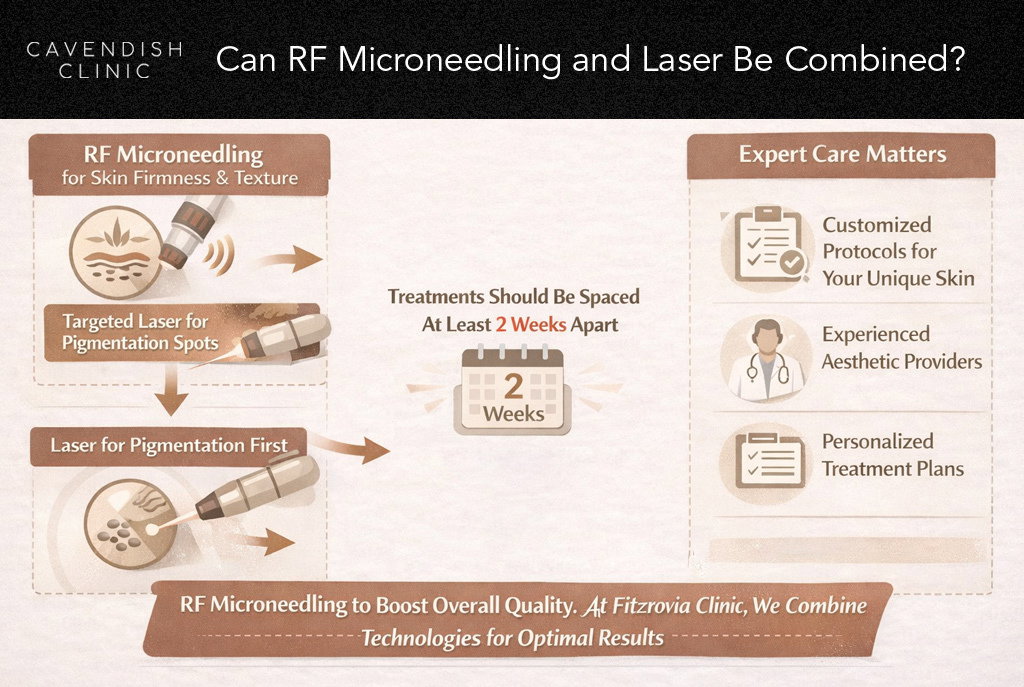
The timing matters critically. Treatments should be spaced appropriately so your skin can recover between sessions and your practitioners can assess progress. Generally, we recommend spacing combined treatments at least two weeks apart. Combining treatments requires an experienced aesthetic provider who understands how these modalities interact with your unique skin. At our Fitzrovia clinic, we design combination protocols tailored to each client’s specific goals.
From our experience at the clinic, the best treatment is the one tailored to your specific concerns, skin type, and lifestyle. RF microneedling suits those prioritising gradual improvement with minimal downtime and excellent results on diverse skin tones. Laser therapy excels when you’re targeting specific pigmentation or want maximum visible change in fewer sessions.
Don’t assume that more aggressive equals better results. A well-executed RF microneedling series can rival the outcome of laser therapy for many concerns, and the safety profile and recovery advantages make it worth serious consideration. We’ve seen clients achieve stunning results with RF microneedling who were initially set on laser therapy.
Individual results may vary significantly. Your skin is unique, and what works beautifully for one client may require adjustments for another. That’s why a detailed consultation is invaluable. We examine your skin carefully, discuss your goals, and recommend the approach most likely to deliver what you actually want.
The Bottom Line
Both RF microneedling and laser therapy are legitimate, proven approaches to skin rejuvenation. Neither is universally superior. Both offer compelling benefits, and your ideal choice depends on your specific goals, skin characteristics, and lifestyle. The decision isn’t about which is objectively better; it’s about which aligns better with what you want and what your skin needs.
What matters most is choosing a provider who listens, understands your skin, and can guide you toward the treatment (or combination of treatments) that will truly deliver the results you want. At our Fitzrovia clinic, that’s precisely what we do. We take time during consultations to understand not just your skin concerns, but your expectations, lifestyle, and preferences for how you want your skin to improve.
Ready to Explore Your Options?
The best way to determine which treatment suits your skin is through a personalized consultation. Our practitioners will assess your skin, discuss your goals, and recommend the most effective approach for you. A consultation is required before treatment, and this initial session is an opportunity to ask everything you want to know. We encourage questions and want you to feel completely confident in your decision.
Get in touch with our Fitzrovia clinic to book your consultation. We’re here to help you make an informed decision and begin your journey toward healthier, firmer, more radiant skin.